

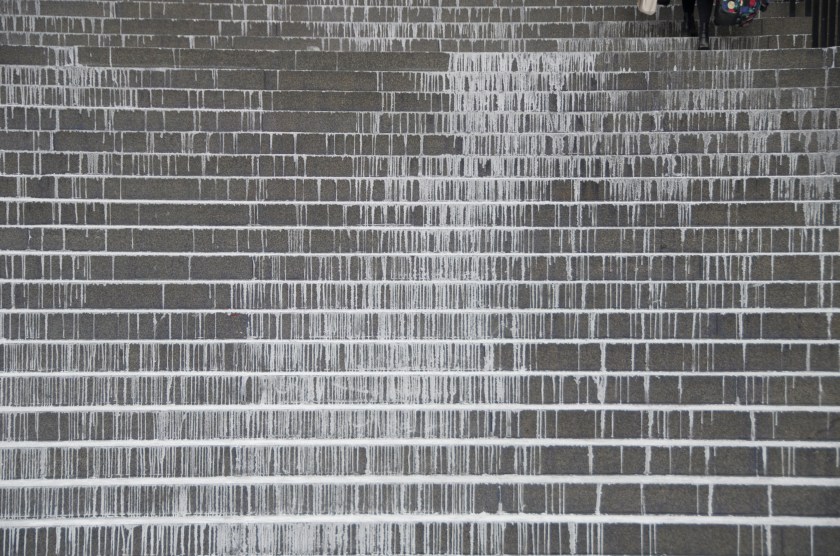
 At the Museum of Contemporary Art
Zero degrees in Chicago
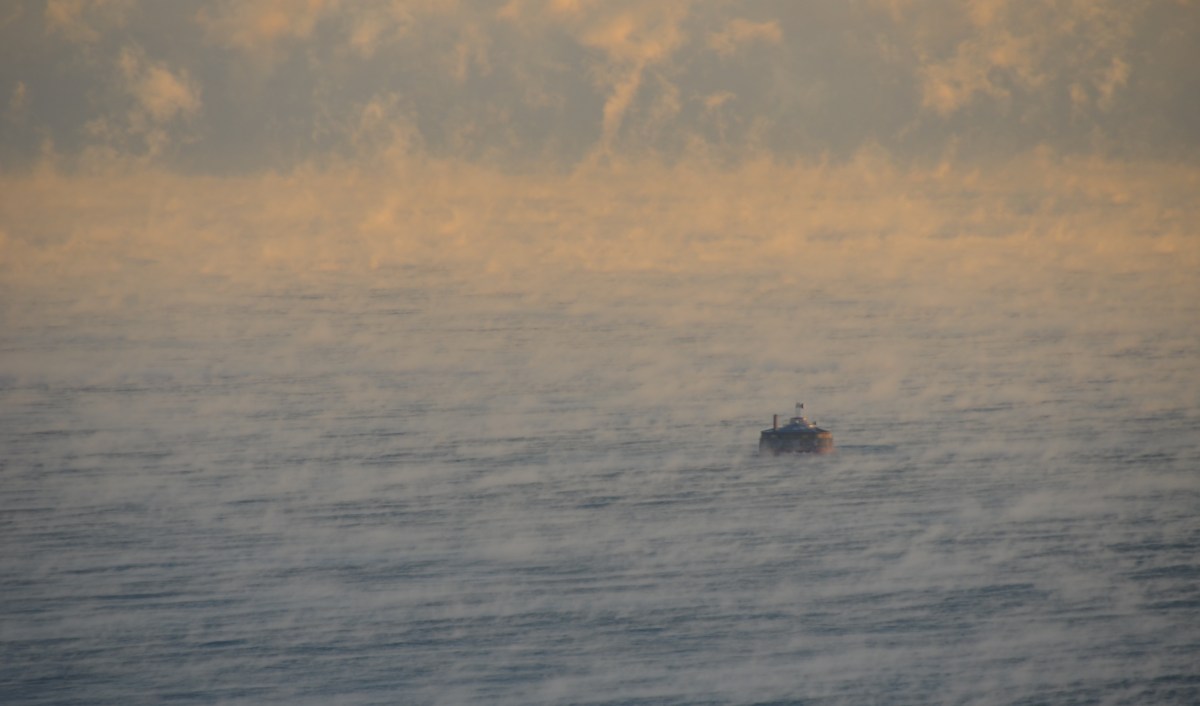
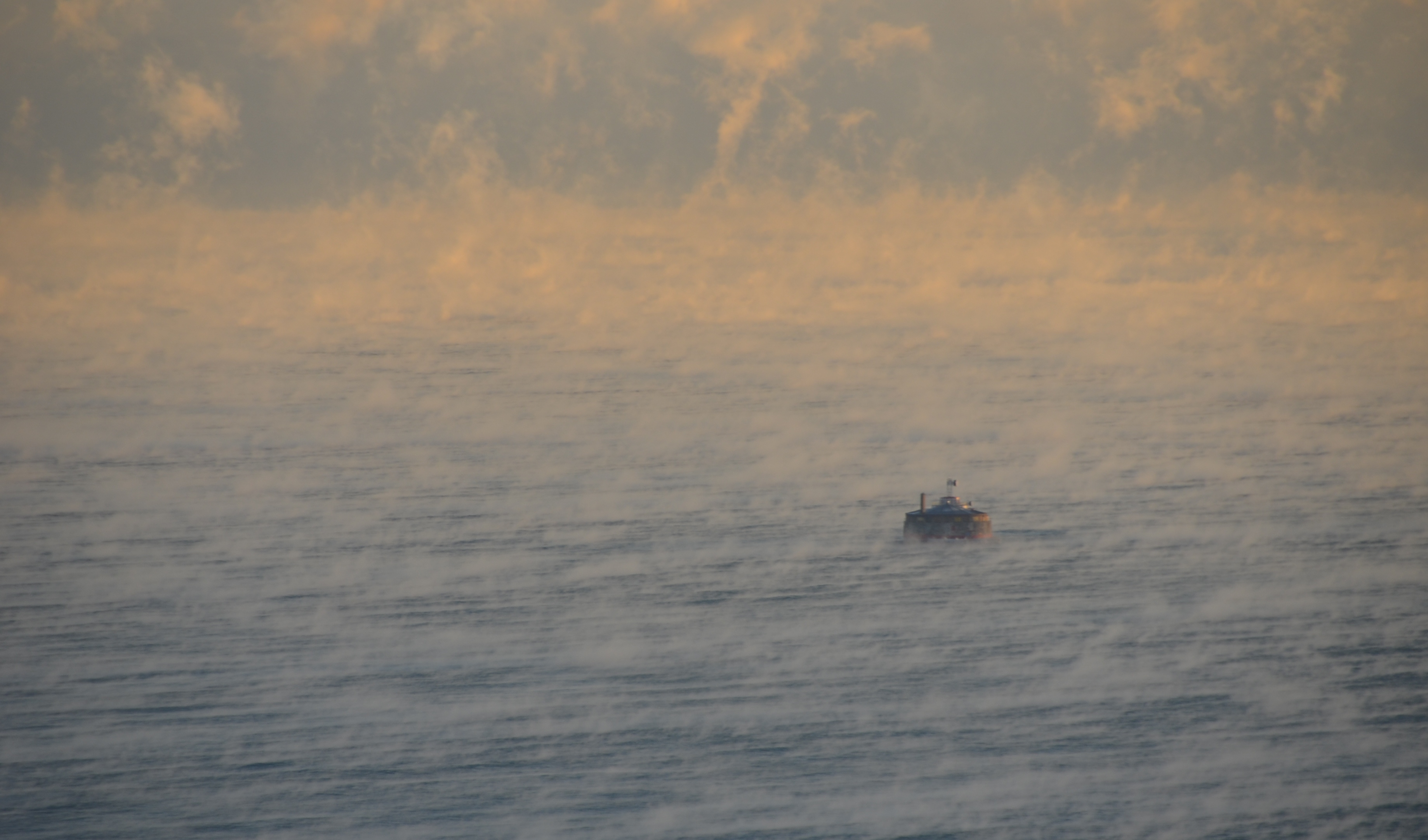
It’s one of Chicago’s “cribs” where the city’s water is drawn from Lake Michigan. Zero degree air and warm water equals six foot clouds that dance over the lake. Behind is a 300′ tall fog bank. 12/15/2016
The Sears Tower currently known as Willis Tower
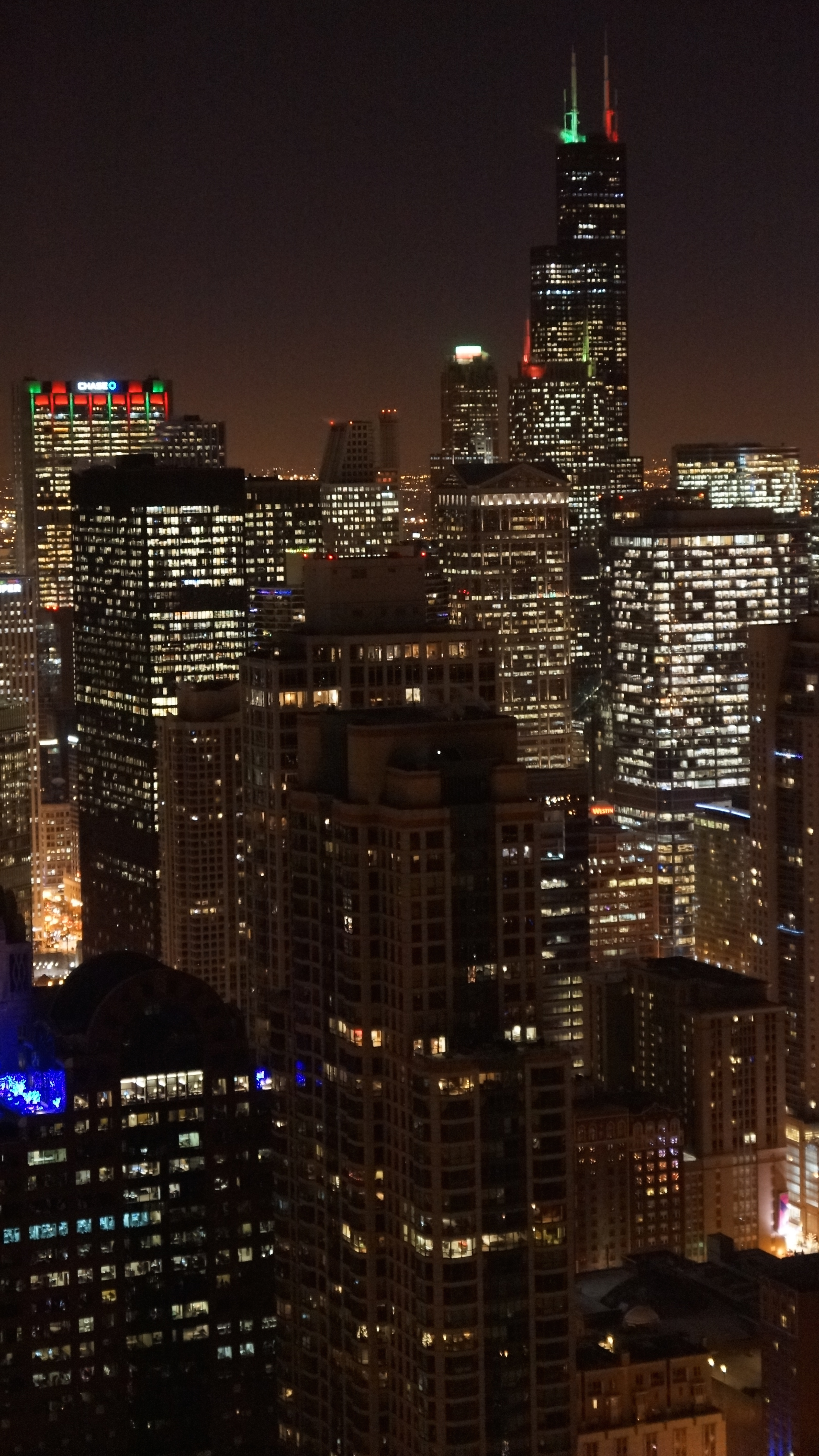
Following written copy from the Chicago Architecture Foundation.
Architects have always been tasked with designing tall buildings to resist wind loads. But as buildings continued to grow taller and taller, new solutions were required. When this 110-story tower was designed, architect Bruce Graham and structural engineer Fazlur Khan of Skidmore, Owings & Merrill (SOM) utilized the bundled tube system to address structural problems never before seen at this scale. Their use of the innovative system ushered in a whole new era of skyscrapers.
The tower is comprised of a cluster of nine tubes connected together to act as a single unit. The tubes support one another, strengthening the structure as a whole. Meanwhile, the variations in tube height disrupt the force of the wind.
John Hancock Center, the finest building in all of Chicago

Why would I say something so brazen as to proclaim the Hancock the finest building in the city? For many reasons. Here’s two. It took me a while to realize it because I needed some perspective. It hit me while I was on a boat on Lake Michigan. While not by definition, the Hancock is shaped like a pyramid. A wide base and narrowing as the building rises to the top. As the ancient Egyptians showed us, pyramids are an eternal shape, even magical. Second. The Hancock is an architectural wonder. Topping out in 1969, the Hancock Building has influenced every skyscraper since. Fazlur Khan, the architectural engineer is considered something of a genius for this bold building. Bruce Graham was the architect and world beater, Skidmore, Owings & Merrill served as the architectural firm.
Chicago’s Marina City and the accidental bird picture
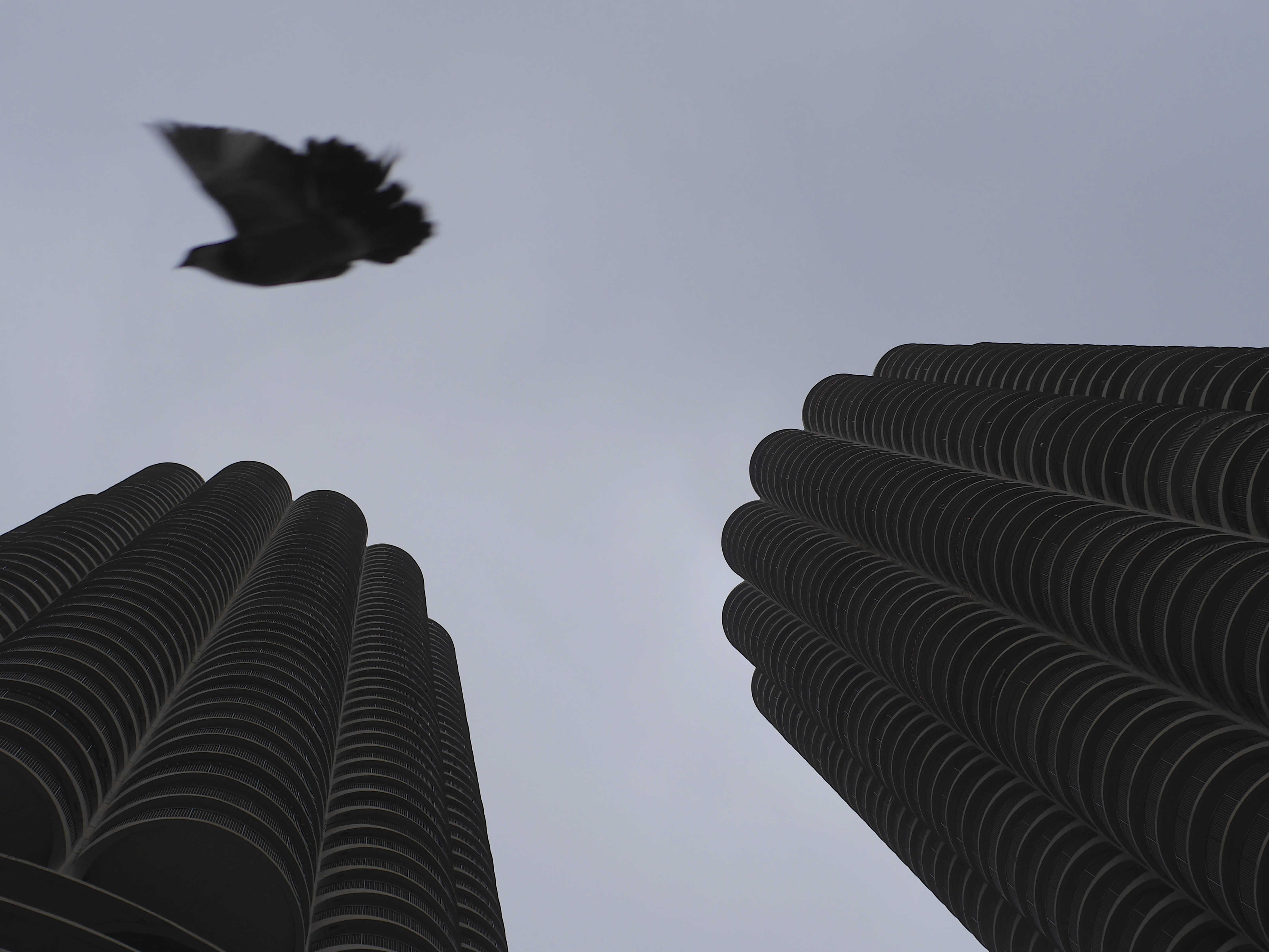
Copy from Chicago Architectural Foundation. “In our ‘cities within cities’ we shall turn our streets up into the air, and stack the daytime and nighttime use of our land.” —Bertrand Goldberg
Downtown Chicago (sometimes referred to as the Loop) is now one of the fastest growing residential neighborhoods in the Chicagoland area. But downtown living hasn’t always been so trendy. When architect Bertrand Goldberg envisioned Marina City, it was an urban experiment designed to draw middle-class Chicagoans back to the city after more than a decade of suburban migration.
By creating a city within a city, Goldberg hoped the convenience of living and playing close to work would help make Marina City a success. After all, the mixed-use development was so much more than just those two “corncob towers.” When completed in 1967, it included two residential towers, plus an office building, a theater, parking for your car or boat and plenty of retail space. But were Chicagoans ready to move back to the city from the outlying suburbs? If Goldberg’s intention for Marina City was to get residents living close to work, it should be considered a wild success. When the development opened, eight percent of residents worked within the development and 80 percent could walk to work.
Marina City was certainly a vision for a new way of living in the 1960s. And the vision was one Chicagoans embraced then and still do today. There are now many residential mixed-use developments in the Loop. Marina City was a concept and development very much ahead of its time.
Marina City
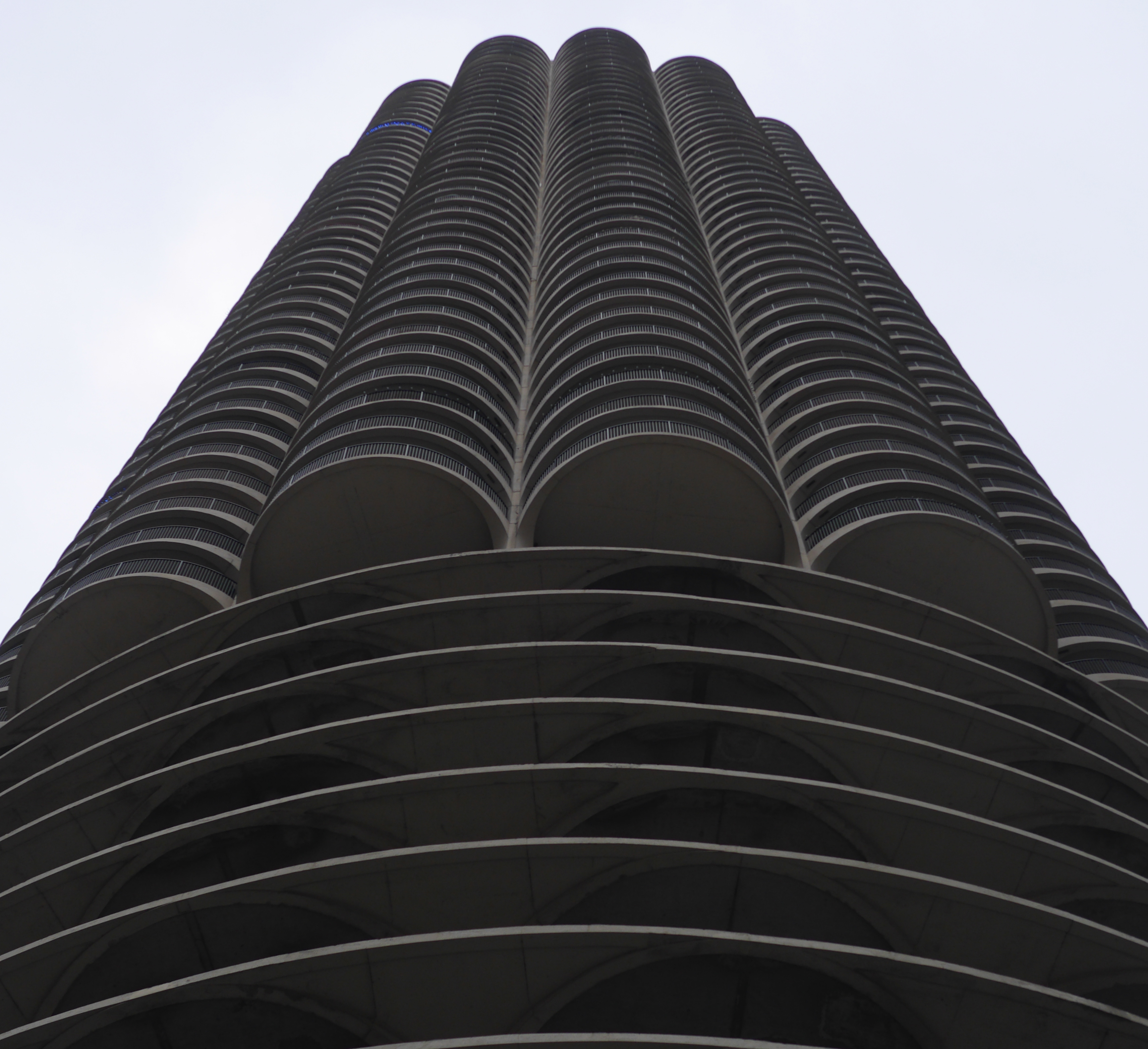
Architect Bertrand Goldberg. Copy from Chicago Architecture Foundation: Forward-thinking architect Bertrand Goldberg was a student of Ludwig Mies van der Rohe, and the influence of Mies’ Modernist principles can be seen in his work. But his own ideas of modular, prefabricated, curved forms are also highlighted in the design of Marina City. Goldberg believed that since no right angles exist in nature, none should exist in architecture. That belief is clearly at work in the 65-story residential towers’ design.
Goldberg compared the bays on Marina Towers to the petals of a sunflower. They radiate from the building’s strong central core and provide stunning balcony views for each wedge-shaped residential unit. The curvilinear reinforced concrete forms became a trademark of Goldberg’s style.
Chicago skyline under fog
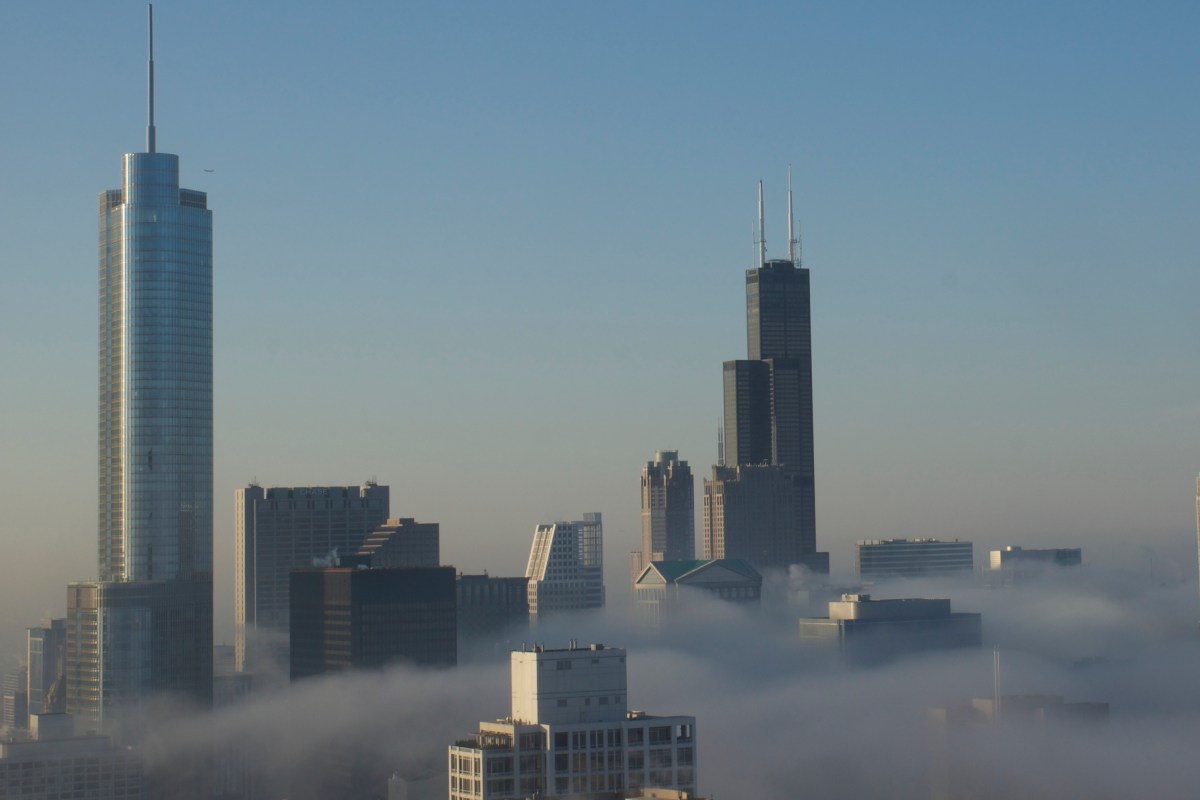
Taken Tuesday, November 15, 7:00 a.m.
The popular vote means something
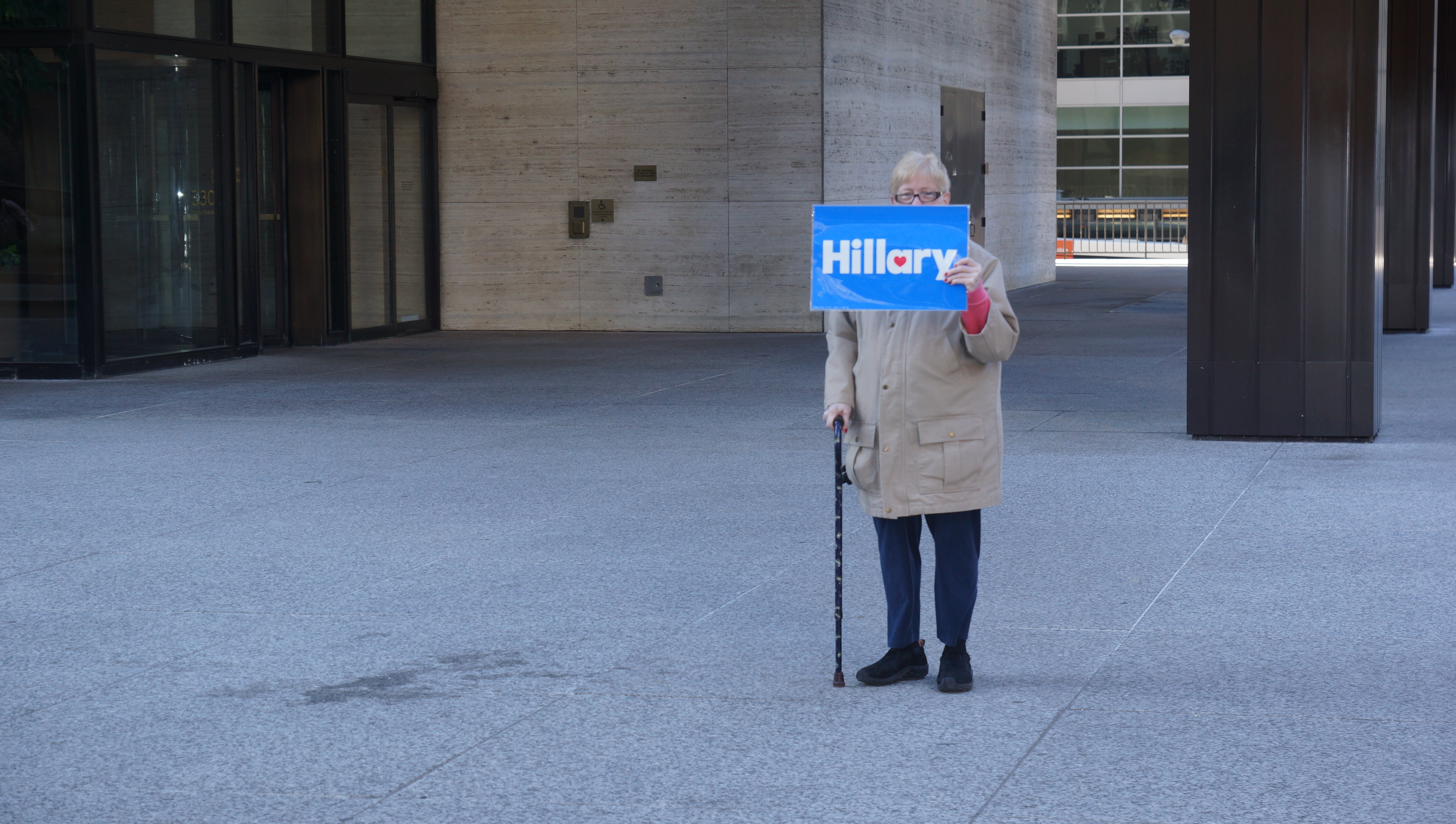
Standing hundreds of feet from anti-Trump protesters, this woman, who asked that I not use her name, had a simple and impossible message of hope.
Anti-Trump Rally, Chicago
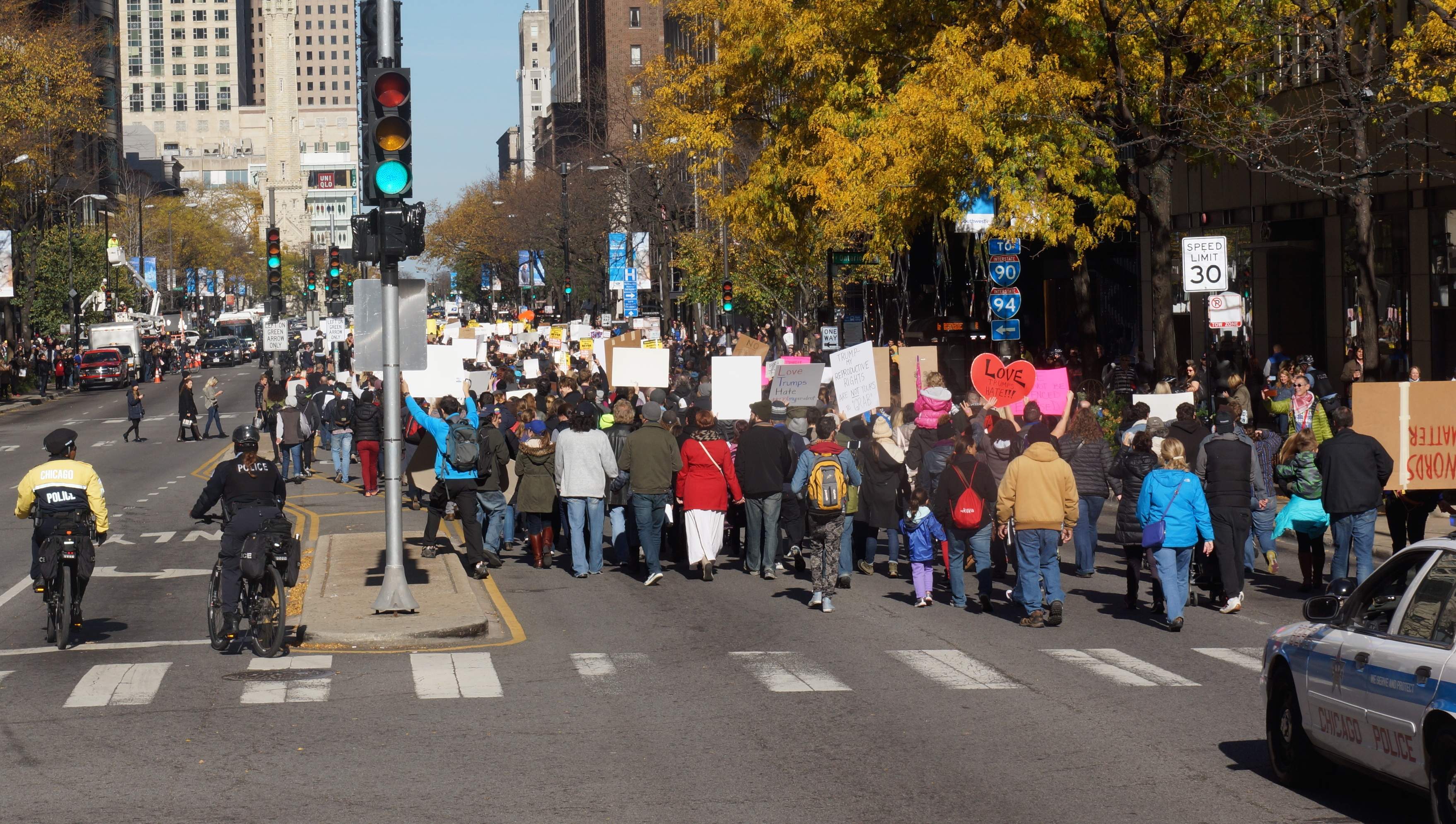
As many as 2,000 marchers forced the closure of Michigan Avenue from the Chicago River to Chicago Street.
Post-election Trump protest

 The Bellingham Sun